Situation Report #2: Earthquake in Central Myanmar 2025

Immediate Response
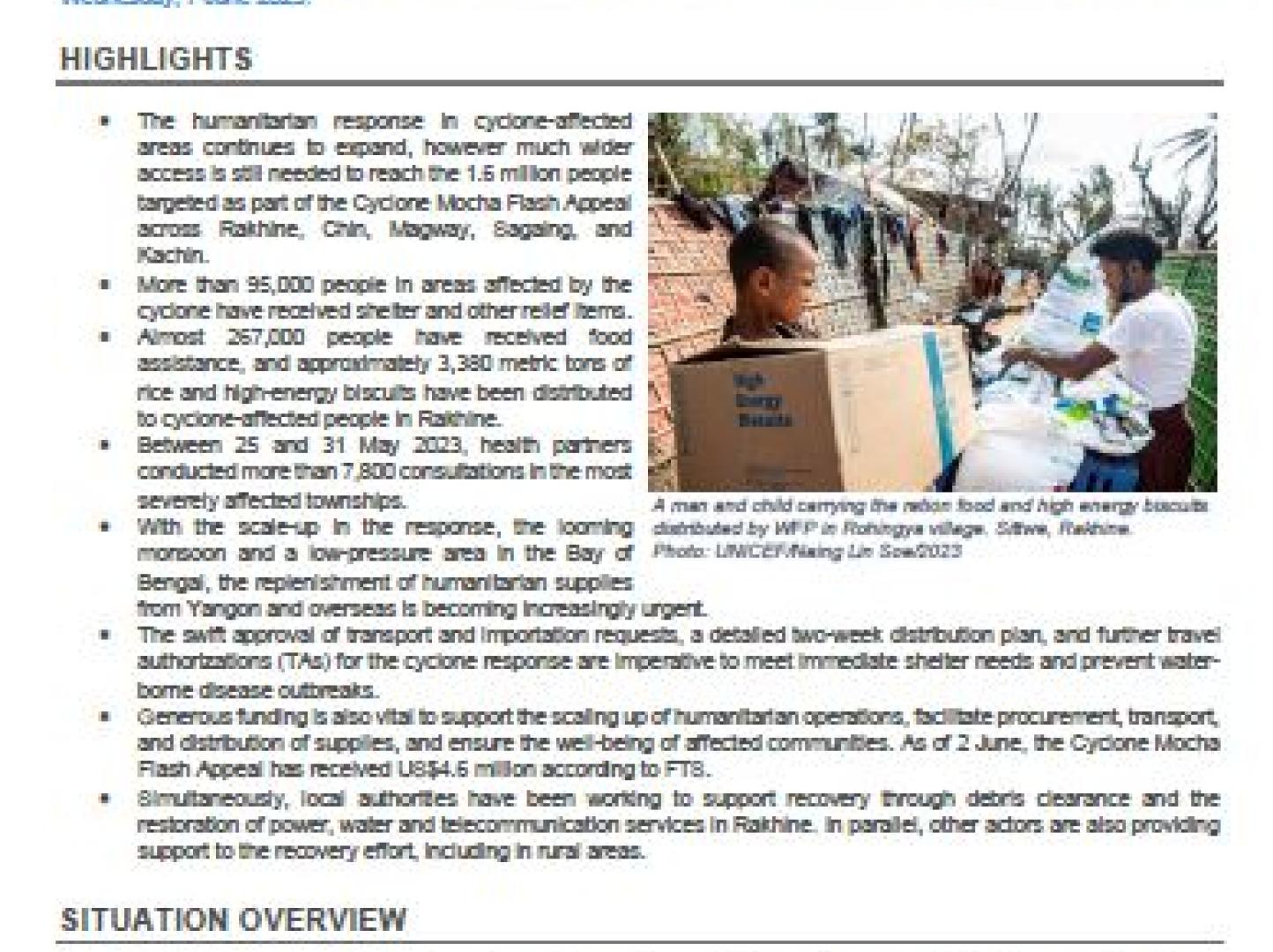
- UNOPS Myanmar, through its programmes and local partners, responded within hours of the earthquake by rapidly providing essential items and deploying immediate multi-purpose cash assistance.
- This swift action initially reached 16,000 people, and the total number of individuals assisted has now grown to 167,000.
- UNOPS utilizes expedited emergency procurement procedures and coordinates closely with partners to accelerate aid delivery.
- UNOPS Myanmar, with the generosity of our donors, has reallocated and raised new funds totalling US$17.2 million for immediate response from our partners. Further funding will be deployed as needs are assessed.
Overview of the Situation
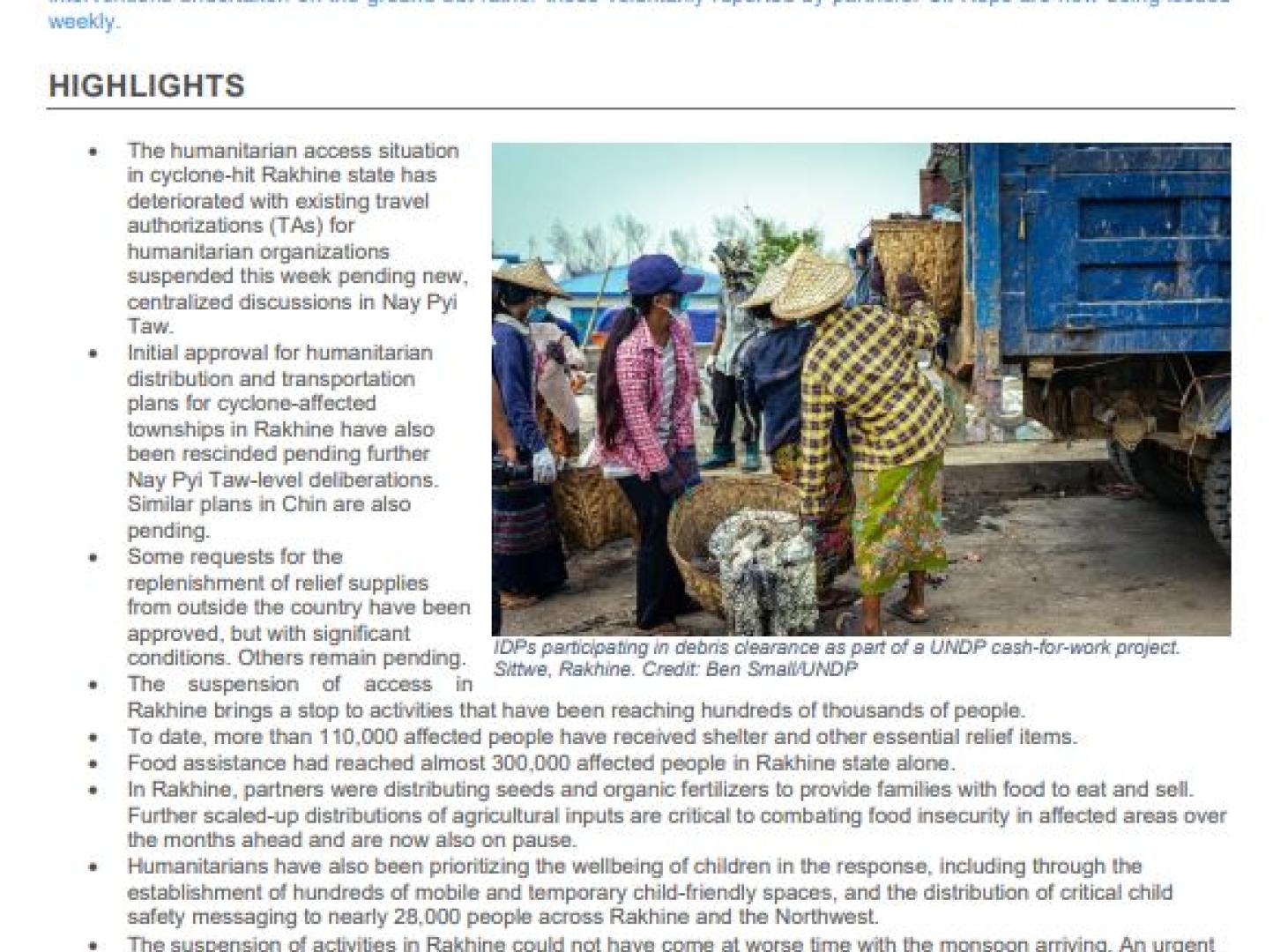
The situation remains critically unstable following the 7.7-magnitude earthquake on 28 March and the subsequent 6.4-magnitude aftershock. According to publicly available figures, more than 3,000 people have died, nearly 5,000 have been injured, and over 370 remain missing nationwide. Actual figures may be higher due to underreporting as widespread telecommunications disruptions persist.
The six impacted regions, including Sagaing, Mandalay, Magway, Bago, Shan, and Naypyidaw, are home to over 28 million. UNOCHA estimates that the earthquakes have affected over 17 million people across 57 of the country’s 330 townships. Among them, more than 9 million were severely affected by the highest tremble.
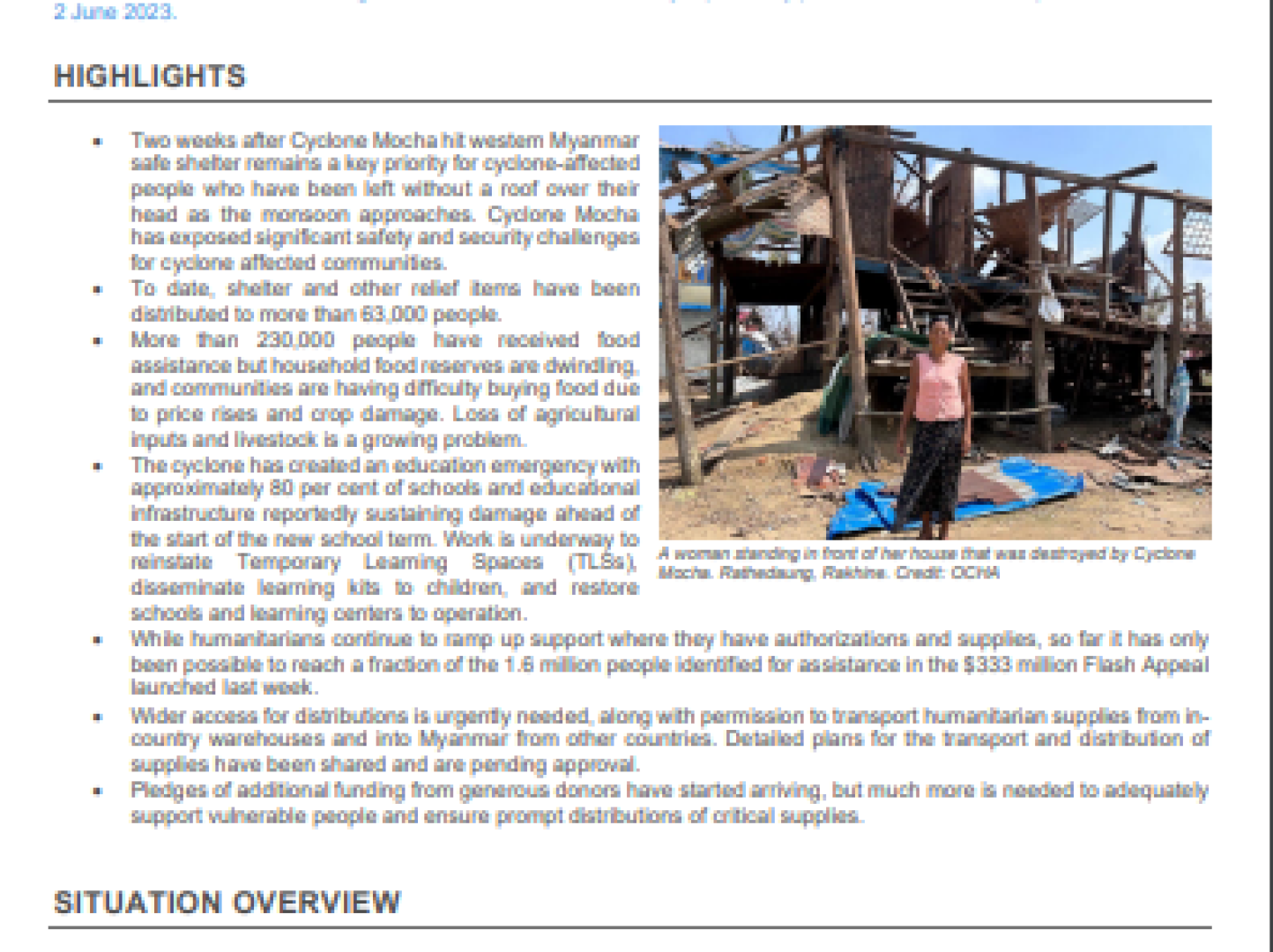
Significant damage has been inflicted upon essential health facilities and infrastructure. Numerous homes and religious buildings, including mosques, churches, and monasteries, have also collapsed. The hardest-hit areas remain without electricity and water, while telecommunications and internet access are severely disrupted, cutting off affected communities from essential services. Power shortages have also impacted the Yangon region and other affected areas.
There are growing concerns regarding hygiene and sanitation, particularly in urban areas.
Additionally, due to the damaged infrastructure, there is a potential for increased flooding during the upcoming monsoon season.
The already dire humanitarian situation is being further complicated by ongoing conflict and airstrikes.


ထုတ်ဝေသူ
လုပ်ငန်းရပ်များဖြင့်ပံ့ပိုးပေးနေသော ပန်းတိုင်များ


ဆက်စပ် မှီငြမ်းရန်အချက်အလက်များ