Seeing them alive was the greatest relief of my life

A mother’s survival and resilience six months after Myanmar’s earthquake
It has been six months since the devastating earthquake struck central Myanmar, with Mandalay Region as the epicenter and among the hardest-hit areas, leaving a trail of devastation and loss. For 39-year-old Thu Zar Lwin, the memories of that day are etched in fear and survival.
On 28 March, Thu Zar and her husband were at the community food market where they both work as daily wage earners. The afternoon rush was in full swing when the ground suddenly began to shake. “The shaking was violent. Crates fell, people screamed—we grabbed each other’s hands and ran outside just seconds before the building collapsed,” Thu Zar recalled.
Moments later, the market roof caved in, trapping several vendors and customers under rubble. Some of them were neighbours and friends she had known all her life. “I still hear their voices in my dreams. We survived, but many did not.”

Seven months pregnant at the time, her mind raced to her two young sons—11-year-old Htet Naing and 7-year-old Zaw Min—who were at home having lunch. “My legs were trembling, not just from the earthquake but from the thought that I might lose them. With a high-risk pregnancy, I feared I could lose all three of my children at once.”
When they reached their home, they found it cracked but still standing. Their two boys were outside in shock, surrounded by fallen walls and frightened neighbours. Across the street, houses had collapsed completely. “Seeing my children alive was the greatest relief of my life,” Thu Zar said softly, “but around us, other families were crying because they had lost theirs.”
The days that followed were harrowing. Families, including Thu Zar’s, slept outside in the cold, terrified by the relentless aftershocks that shook Mandalay for days. There was no water, no electricity, and very little food. Communities pooled whatever they could salvage, cooking meals over open fires in the streets. The air was heavy with grief and smoke. “Every aftershock sent the children screaming. None of us felt safe. At night, you could hear people sobbing because loved ones were gone.”
Help arrived soon - trucks bearing the UNICEF logo rolled into their community, bringing clean water, soap, sanitary supplies, and water purification kits. For Thu Zar, still heavily pregnant, the timing was lifesaving. “They registered pregnant women like me, gave us micronutrients and health checks. For a high-risk pregnancy, that care gave me hope.”
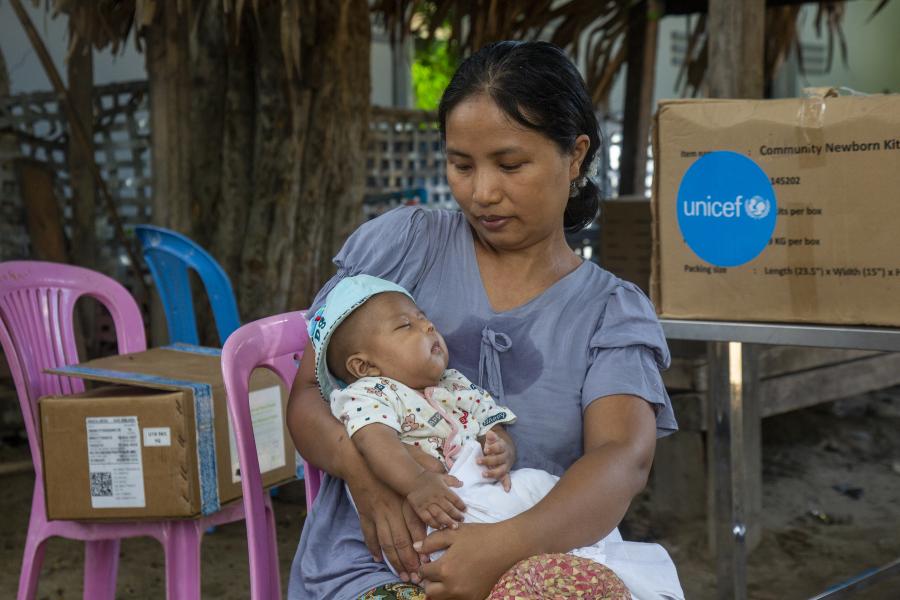
Two months ago, she delivered her third child—a baby boy named Myo. Since then, she has been receiving regular support from a UNICEF-supported mobile health clinic: micronutrients, counselling on exclusive breastfeeding, and vaccinations. Myo has already received his first round of vaccines, and Thu Zar is determined to bring him back for the next dose due in October. “I want him to stay healthy and protected,” she said. “When I hold him, I remember how close we came to losing everything. His survival gives me strength and hope.”
Her older sons are also benefiting from regular nutrition support. As schools slowly reopened after partial repairs, they received UNICEF-provided emergency learning kits—including books, pencils, and other basic supplies—so they could return to class despite the losses. For Thu Zar, watching them resume their studies, even in damaged classrooms, is another step toward normalcy. “It gives me relief to see them learning again,” she says. “Even after everything, they still have a chance to continue their education.”
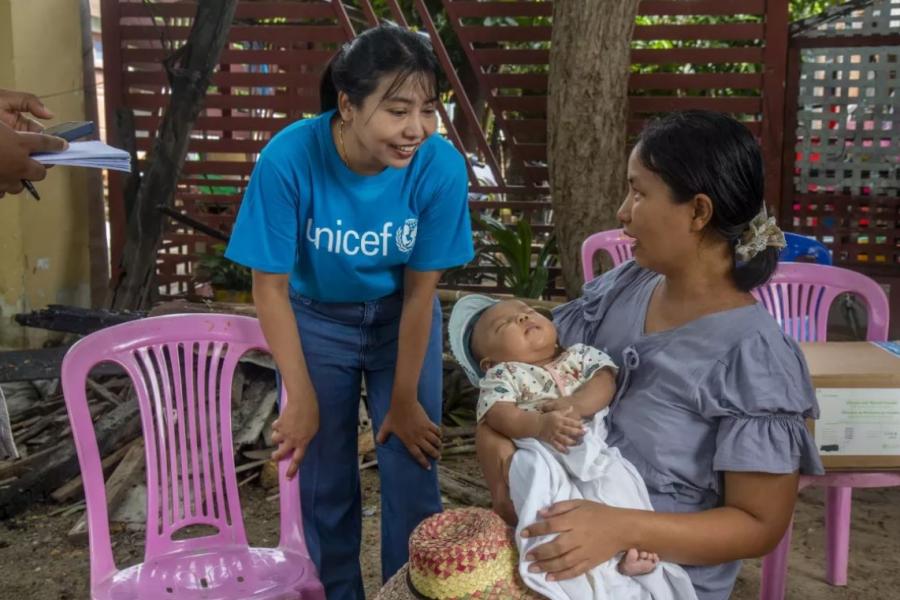
Yet life remains precarious. The local market has not recovered, with fewer customers and smaller incomes. “We still struggle every day. Sometimes, there is barely enough for rent and food. But at least one worry has been lifted—my children are healthy.”
Thanks to the timely support of donors, UNICEF was able to deliver lifesaving assistance in the immediate aftermath of the earthquake—bringing water, health, and nutrition services to families like Thu Zar’s when they needed it most.
But the needs are far from over. Six months on, families are still struggling to recover, and the monsoon floods have only deepened the hardship. “We are grateful for the help we received,” Thu Zar said. “But life is still very hard. Since the earthquake, clean water has been a constant struggle, and the floods have only made it worse. We worry about our children getting sick from dirty water, and often there isn’t enough even for cooking or washing.”
The scars of the earthquake remain everywhere in Mandalay and central Myanmar—in collapsed homes, empty schoolyards, and families mourning loved ones lost. But amid the hardship, families like Thu Zar’s are finding resilience—and reasons to hope. “The support carried us through the darkest time. Now, even with the struggles, we know we are not alone.”
*This story was originally published on the UNICEF Myanmar website.


Written by

UN entities involved in this initiative
Goals we are supporting through this initiative