UNICEF Clean water program transforms underserved communities in Yangon, Myanmar
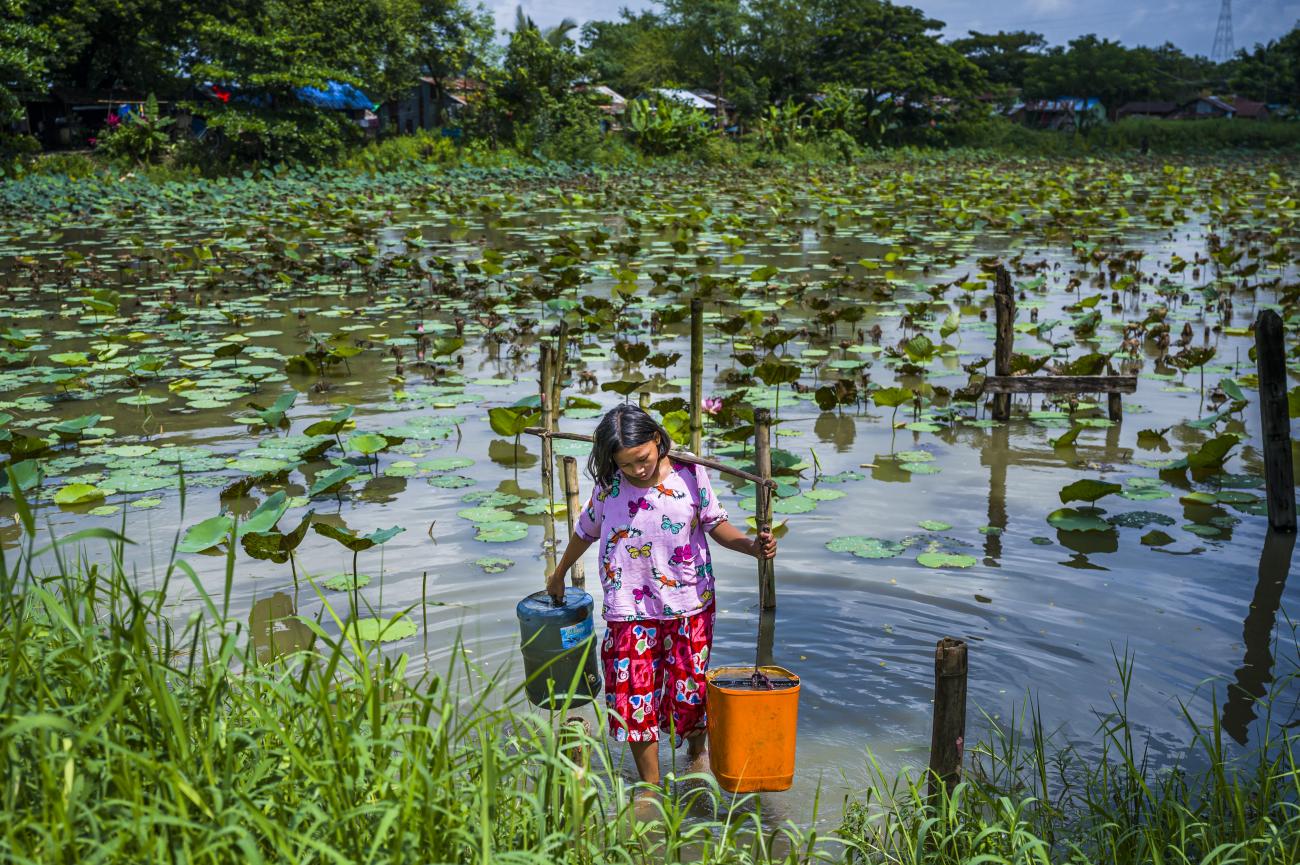
UNICEF's partnership with EU and WaterAim brings safe water and renewed dreams to families in Aye Ywar, Yangon
For five-year-old Yoon Yoon from Aye Ywar village in Kyimyindaing Township, Yangon, life has transformed completely. She no longer suffers from the persistent bouts of diarrhoea that once drained her energy and kept her from play.
Her mother, Ma Su Mar, still remembers the difficult days when her family had no choice but to drink water drawn straight from a nearby pond, often without boiling or filtering it — unknowingly exposing themselves to waterborne illnesses.
“Sometimes, when my children got sick, we thought it was just from unclean food,” Su Mar recalled. “We didn’t realise the water was the real cause.”
This was the painful reality for many families in Aye Ywar, a village on the outskirts of Yangon near the Hlaing River, where safe drinking water has long been out of reach. With a household income of around 400,000 kyats (approximately $95) per month from her husband’s carpentry work and a modest contribution from her elder daughter’s tutoring, there was little left for basic necessities, let alone clean water.
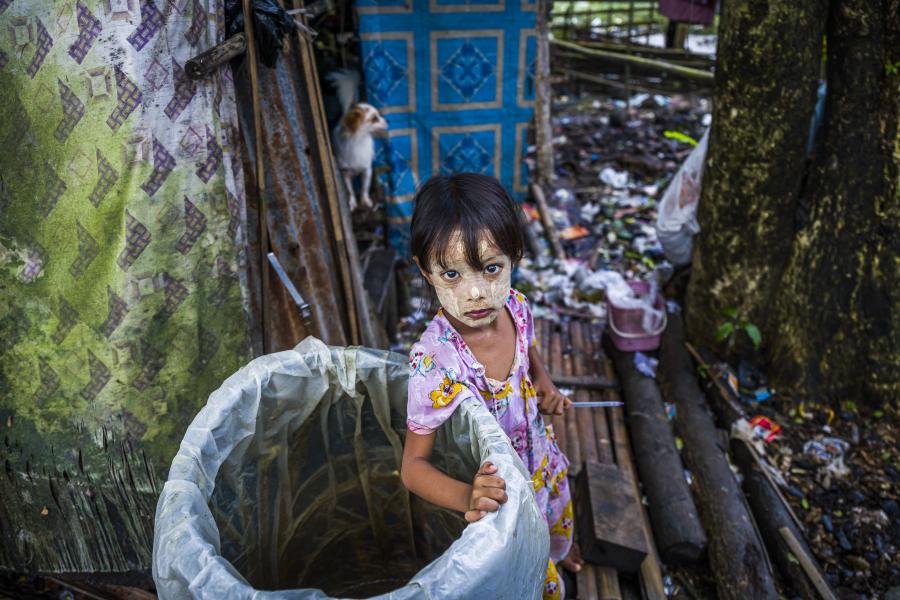
Everything changed when UNICEF, with funding from the European Union's Civil Protection and Humanitarian Aid Operations (ECHO), partnered with WaterAim to deliver a lifesaving WASH (Water, Sanitation and Hygiene) programme to the most vulnerable communities, like Aye Ywar.
“A volunteer from WaterAim invited me to a community meeting where they explained about safe water and how to prevent diarrhoea,” said Ma Su Mar. “That’s when everything changed.”

Through the programme, families received health education, water purification tablets and sachets, acute watery diarrhoea response kits, oral rehydration salts, soap, buckets, and gloves. Most crucially, a community solar-powered water purification system was constructed — providing a reliable new source of clean water for drinking and cooking.
The results were immediate and life-changing. “Now, we no longer suffer from diarrhoea,” Su Mar said. “It feels like the disease has disappeared from our village.”
Ma Su Mar sees the direct connection between her family's wellbeing and her children's future.
“Good hygiene and health are essential for their education,” she said. “If they’re sick, they can’t go to school or study properly. I want both my daughters to finish school, graduate, and have the freedom to pursue their dreams. I wish for them a fulfilled life.”
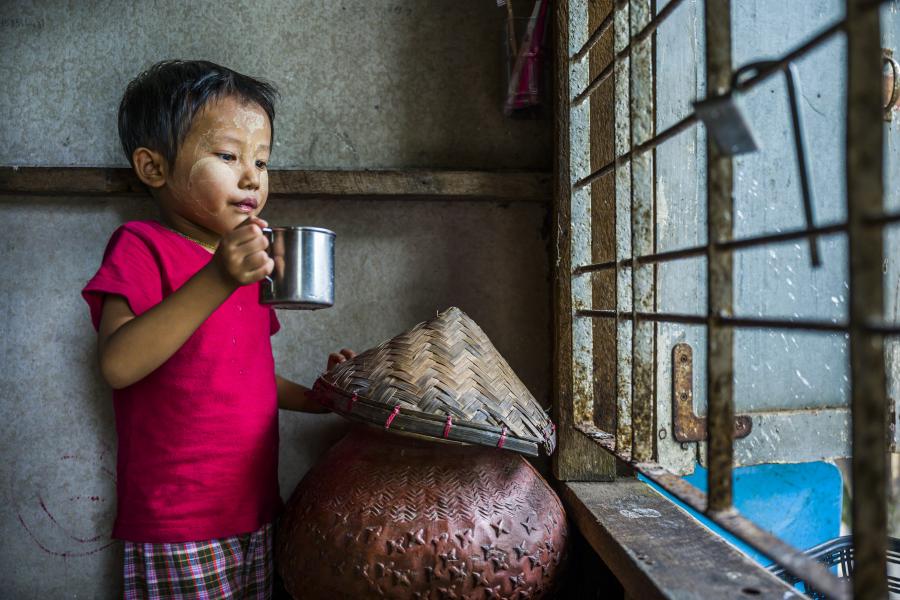
For her eldest daughter, Moe Pyae, that dream has always been clear. “I want to become a teacher,” she said. But her path has not been easy. After dropping out of school in 2020 due to the COVID-19 pandemic and subsequent political unrest, Moe Pyae tried to return. When her school refused to readmit her for being absent for too long, she enrolled in Grade 12 at a private school. But after just a few months, the monthly cost - 200,000 kyats (around $45) in tuition alone, not including additional costs such as books - became too much for her family and she had to drop out again.
Now, she earns that same amount each month by tutoring primary school students in her neighbourhood. “I am stuck right now,” she admitted. “But I still want to go back to school and graduate and I still want to help children learn. That’s my dream.”
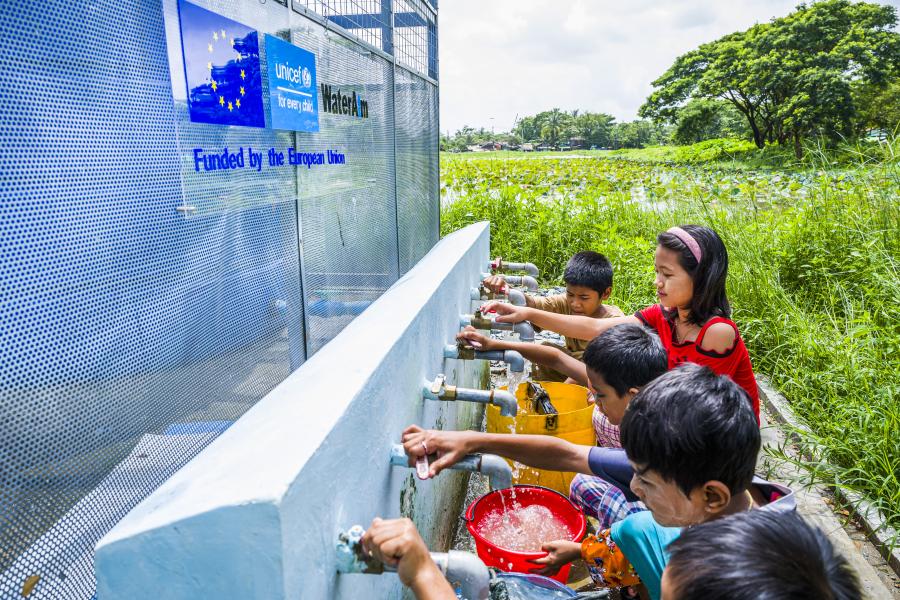
In Aye Ywar, the simple act of getting clean water from a new water purification station represents more than just convenience — it symbolises a turning point. For families like Su Mar’s, safe water is the foundation for stability, education, and dignity.
Today, as clean water flows freely in their village, so too do the dreams of its children. As Ma Su Mar reflects on the transformation, "We are so thankful this programme came to our village. Now our children can be healthy, go to school, and pursue their dreams."
*This story was originally published on the UNICEF Myanmar website.


UN entities involved in this initiative
Goals we are supporting through this initiative