Story
05 April 2024
Dreams at risk
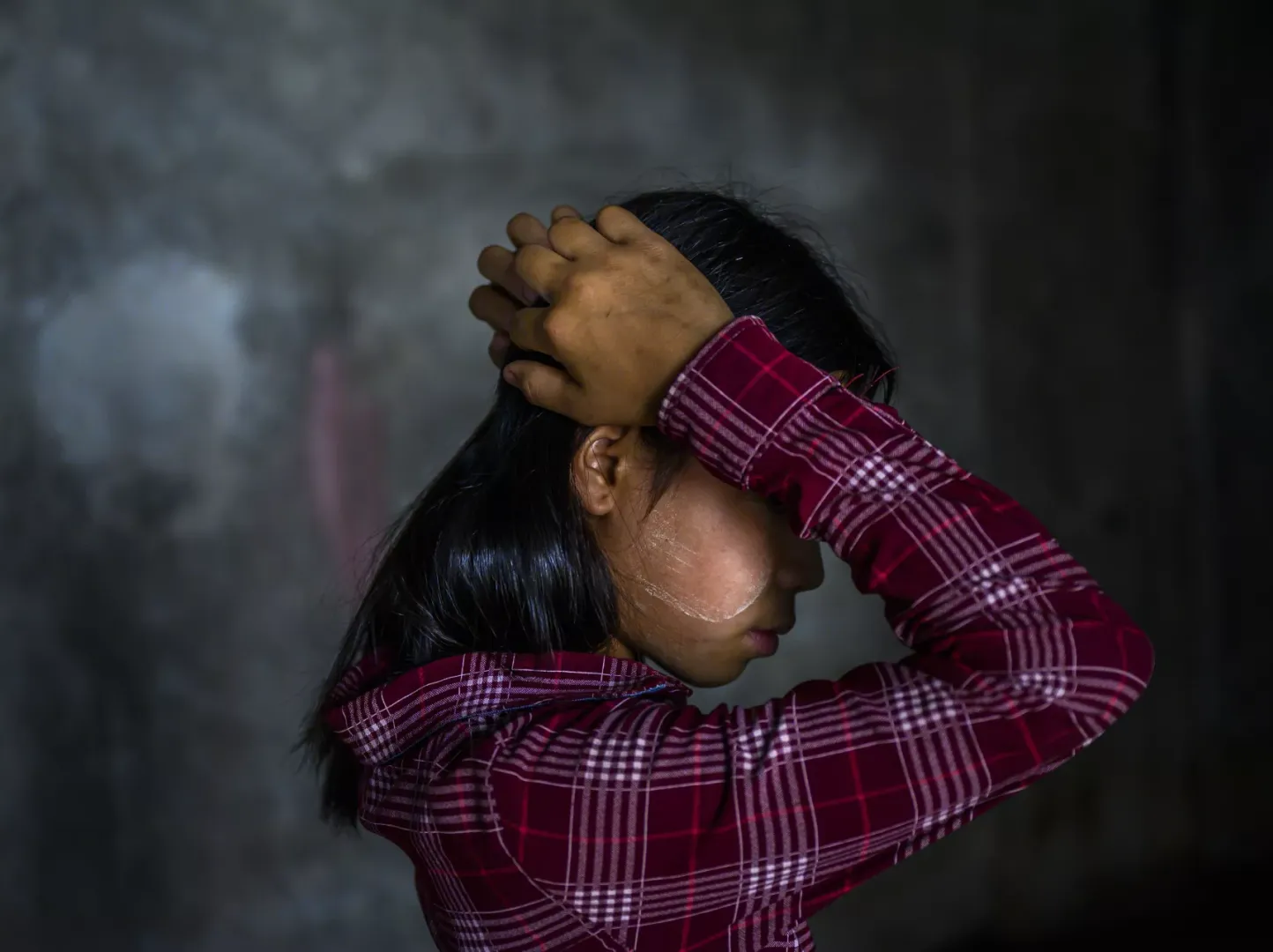
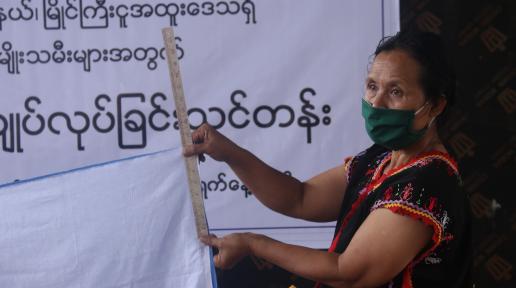
"In a split second, my world shattered into a million pieces along with that landmine. My brother, my dreams, everything," Naw Nee's voice quivers with emotion as she recounts the tragic day when her brother fell victim to a landmine explosion. At just 13 years old, she grapples with the overwhelming weight of grief, the persistent agony of shrapnel embedded in her body, and fading hopes of becoming a physician.Now in its third year, the escalating conflict in Myanmar is taking a devastating toll on children who are bearing the heaviest burden and brunt of violence, mass displacement and severe disruptions to critical services, including health and education.But as the clashes intensify, the increasing use of deadly weapons, especially landmines by all parties to the conflict, is bringing the grim reality of killing and maiming—the worst form of grave violations against children—to the doorsteps of many families across Myanmar.“We had already gotten used to the constant sounds of shooting, and we knew we had to run into our homes to escape crossfire; but landmine explosions right in our neighborhoods make us feel there is just no safe place,” said 14-year-old Paing, whose childhood dream was to be a soldier, spurred by the passion to protect his family and community from raging conflict.But like Naw Nee, Paing is struggling to see any future after he stepped on a landmine in his community farm, triggering an explosion that shattered his right leg and damaged his hand. “I went with my father to search for our injured cow in a nearby farm when I suddenly heard a loud bang, and my body flew above the ground. I thought it was a mortar dropping nearby, but actually I had stepped on a landmine,” Paing recalled.His right leg had to be amputated to save his life. “Now I only dream of being able to somehow support my parents, and also my family when I have mine someday. The dream of being a soldier is forever gone.”Like Paing, Naw Nee no longer sees her home community as a place of refuge after losing her only brother to a landmine explosion in December 2023. “I was playing with my friends and my younger brother after school, just outside our home, when I saw my younger brother picking up a round object the size of a marble with a nail-like attachment,” she recalled. “It didn't last more than a couple of blinks before it blew up, killing my little brother and also injuring my friend and me, with pieces of shrapnel piercing into my cheek, head, and back.”Naw Nee was rushed to the nearest hospital where some of the pieces of shrapnel were removed, but at least two pieces remain lodged in her body. Even though she is lucky to have survived, things will never be the same again. “Our playground now only reminds me of the death of my brother and doesn’t provide me with any good memories anymore.”UNICEF’s Landmine Incident Monitoring Report revealed a total of 1,052 verified civilian casualties from landmine explosions in 2023, which is 270 per cent of the 390 recorded in 2022. Alarmingly, nearly half of the 1,052 civilian casualties from landmines in 2023 were recorded between October and December alone, indicating a significant spike in the use of deadly weapons as conflict exacerbates. With almost all states and regions of the country now reported to be contaminated by landmines, it is a particularly dire situation for Myanmar’s children, who account for over 20 percent of landmine casualties. Every step they take could be their last.In the Bago region, which ranks third highest in casualties from landmine incidents at 9 percent, after Sagaing region (35 percent) and Shan state (12 percent), livelihoods and survival are both at risk, with farmlands also heavily contaminated.Losing his mother at birth and with his father having fled the country years ago, 15-year-old Aung looks up to his older brother, with whom he works on a family farm to make a living and support his education. However, the afternoon of 20 December 2023 upended his life forever.“I was working on our family’s rice farm after school when I stepped on a landmine. I heard a loud bang that deafened my ears, and I passed out for a moment.”Regaining consciousness in the hospital, Aung recalls seeing doctors and nurses operating on him. “I lost my left leg below the knee, and my left hand was injured.”Facing the future feels daunting for Aung. “My dreams of overcoming our family's hardships are now at risk, without my leg to propel me forward,” he said. As Paing’s mother, Daw Eint, said, “Every time our children step out of our homes, whether it's to school, the farm, or to play, fear grips our hearts like a vice. We never know if they will return safely, and the looming threat of landmines only adds to our anguish.”In 2023, UNICEF reached nearly 140,000 people, including children, across Myanmar with mine risk prevention and response service including survivor assistance. Mine risk education sessions, backed with pamphlets and handbooks adapted in local languages, are being scaled up across conflict areas.The increasing use of landmines in Myanmar presents an alarming threat to the safety and well-being of children. Every explosion not only claims lives but also shatters dreams and robs children of their childhood innocence. It is imperative that all stakeholders, including all parties to the conflict, work to ensure the safety and protection of children from the devastating impact of landmines.*This story was originally published on UNICEF Myanmar Website on 4 April 2024.