My heart sank when I saw the red
A mother’s long journey from fear to hope amid hardship in quake-hit Mandalay region, Myanmar
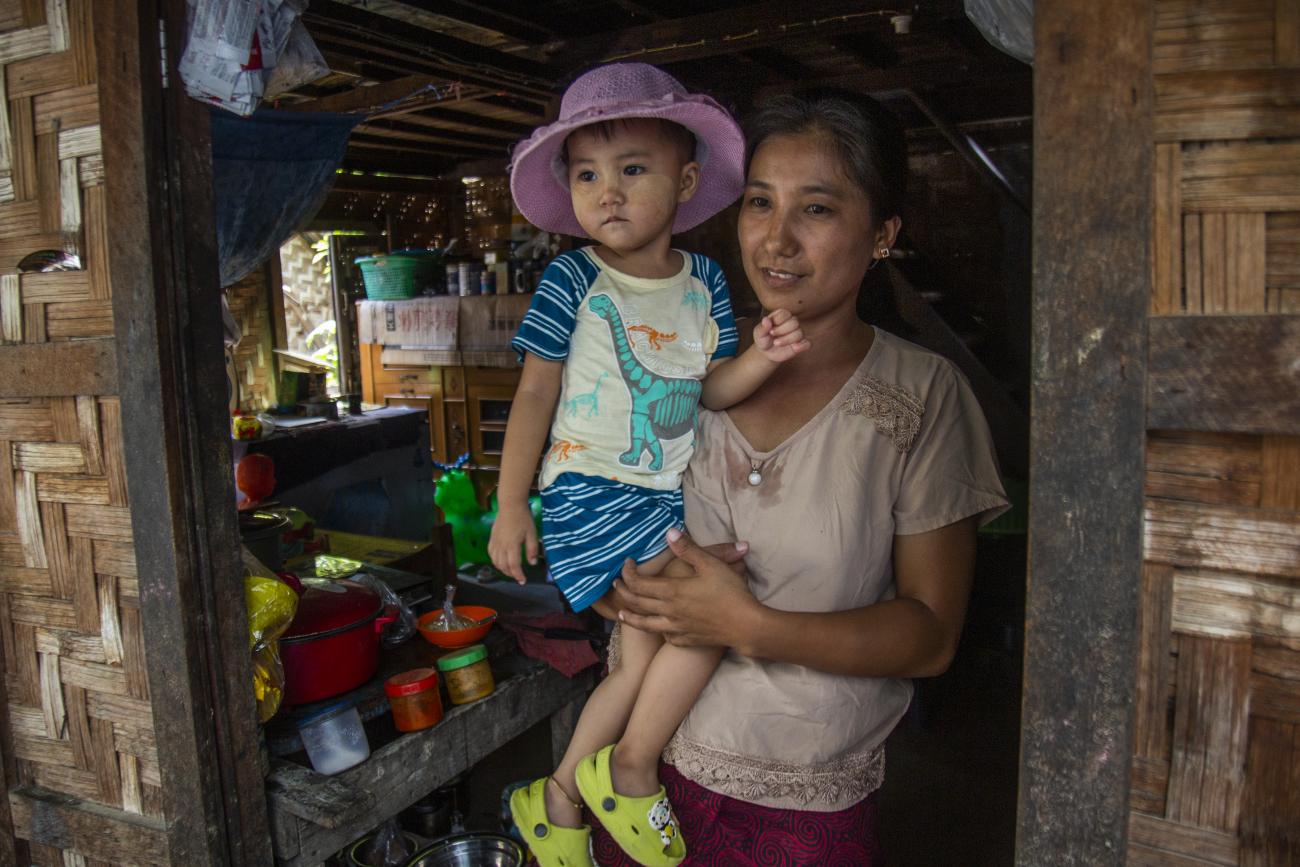
It was lunchtime on 28 March 2025 in Amarapura, a rural township on the outskirts of Mandalay where families live in fragile houses, survive on daily wages, and depend on small farms and markets to survive. In their small home, 40-year-old Nyein Ei Thwe was cooking rice while her two youngest children played nearby. Without warning, the ground suddenly roared and shook violently. “The pots fell, the walls groaned, and the children screamed,” she recalls. “I grabbed them and ran, thinking the house would bury us alive.”
Her own house was cracked but still standing. Many neighbours were not so lucky. Just a few meters away, her husband’s brother was killed when his home collapsed, and two of his children were badly injured. “The street was filled with crying — people searching for family in the rubble,” she remembers. “We survived, but we lost so much.”
In the days that followed, families slept outside, terrified of the constant aftershocks. Nights were filled with sobbing and fear; days with mourning and scraping together meals from what little they could salvage. With schools closed and markets destroyed, survival became a daily struggle.
For Nyein Ei Thwe’s youngest daughter, the disaster was especially cruel. Always smaller than her peers and a picky eater, two-year-old Shin Min Ei stopped eating almost completely after the earthquake. “She had no strength,” her mother recalls. “Her arms and legs grew thinner every day, and she only clung to me and cried at night. I thought she was slipping away from me.”
At just 8.5 kilogrammes, Shin Min Ei was far below a healthy weight for her age.

Soon UNICEF mobile nutrition teams reached the village, and began screening children one by one. Nyein Ei Thwe had always worried about her daughter’s small size, but the test confirmed her worst fear. The MUAC tape slipped into the red zone — severe acute malnutrition. “At first I didn’t understand,” she recalls. “Then they explained red meant danger. My heart sank. I thought I might lose her.”
But help came quickly. The team gave her packets of Ready-to-Use Therapeutic Food (RUTF) and showed her how to feed Shin Min Ei alongside breastfeeding and simple meals. They returned for regular follow-up visits, checking her progress and counselling her on safe feeding and hygiene. “That gave me hope,” says Nyein Ei Thwe. “I followed their guidance diligently. It gave me a new sense of duty, and I finally felt we were not alone in saving her”.

Today the difference is clear. Shin Min Ei now weighs 9.7 kilogrammes. She eats with appetite, sleeps peacefully, and runs after her siblings with renewed energy. “She laughs, she plays, she is herself again,” her mother says. “I feel like I have my child back.”
But while her daughter has regained strength, the household’s struggles continue. With her brother-in-law gone, his children are now part of their care — stretching already meagre resources even thinner. Her husband’s carpentry work has all but disappeared, as most families still live in makeshift shelters rather than repairing their homes. “Suddenly there are more mouths to feed, but less work and less income,” says Nyein Ei Thwe.
They turned to small farming to fill the gap, but ongoing heavy rains and flash floods have wiped out much of their effort. On top of it all, the monsoon floods have contaminated scarce water supplies, raising new fears of disease.

“It has been a long journey since the earthquake, with so much loss along the way,” she reflects. “We are grateful for the support that helped us survive those darkest moments, but we still face many struggles every day. Even so, when I see my youngest growing stronger, it gives me hope that we can endure.”
Six months on, the scars of the earthquake remain — in cracked walls, collapsed homes, and families pushed to the brink. For children already living on the edge of hunger and poverty, the disaster drove them even closer to crisis.
Yet with the vital support of donors, families are finding the strength to carry on — enabling children like Shin Min Ei to survive, recover, and hope again as their communities slowly rebuild.
For her mother, that hope is deeply personal. “Without this support, I don’t think she would still be here,” Nyein Ei Thwe says. “Now I dream of her growing strong, going to school, and having a better life than me.”
*This story was originally published on the UNICEF Myanmar website.


Written by

Saw Wai Moe
UN entities involved in this initiative
Goals we are supporting through this initiative