Myanmar inaugurates coffee processing plant, supporting farmers to transition from illicit crop cultivation

Hopong, Myanmar - After ten years of continuous work, the Green Gold Cooperative (GGC) has reached a historic milestone: the completion of its central coffee processing plant — a transformative step for communities in southern Shan State that once depended on opium poppy cultivation.
The new facility shows how, in just a decade, farmers have moved from planting their first coffee seeds to running a fully autonomous and self-sustaining production process.
From poppy fields to coffee crops
Myanmar is currently the world’s leading producer of illicit opium. This economy continues to shape rural life in the country, generating up to USD 518 million in an environment characterized by poverty and insecurity conditions.
For more than 30 years, Alternative Development programmes have helped communities transition away from illicit crops. The GGC is one of the most successful examples in Myanmar, where more than 1,000 farmers have moved from poppy to high-quality coffee and gained access to international markets, showing that sustainable and legal livelihoods initiatives are possible even in areas heavily affected by opium cultivation.
GGC’s journey began in 2015, when 530 farmers took the bold step of replacing opium poppy with coffee crops.
Their goal was not only to improve livelihoods but to build a sustainable, community-owned business. Today, the cooperative brings together more than 1,000 producers across 48 village committees, and has become a regional model for inclusive, sustainable development.
In 2019, GGC became Myanmar’s first Fairtrade-certified coffee producers’ organization, allowing farmers to invest the Fairtrade social premium in social projects and production improvements. These same funds helped purchase the land on which the processing plant now stands.
The first phase of construction began three years ago with support from Switzerland, enabling GGC to process green coffee beans locally. The final phase, completed with support from the Government of Japan, added a new office building, a roasting and packaging area and a fully equipped laboratory for coffee quality analysis.
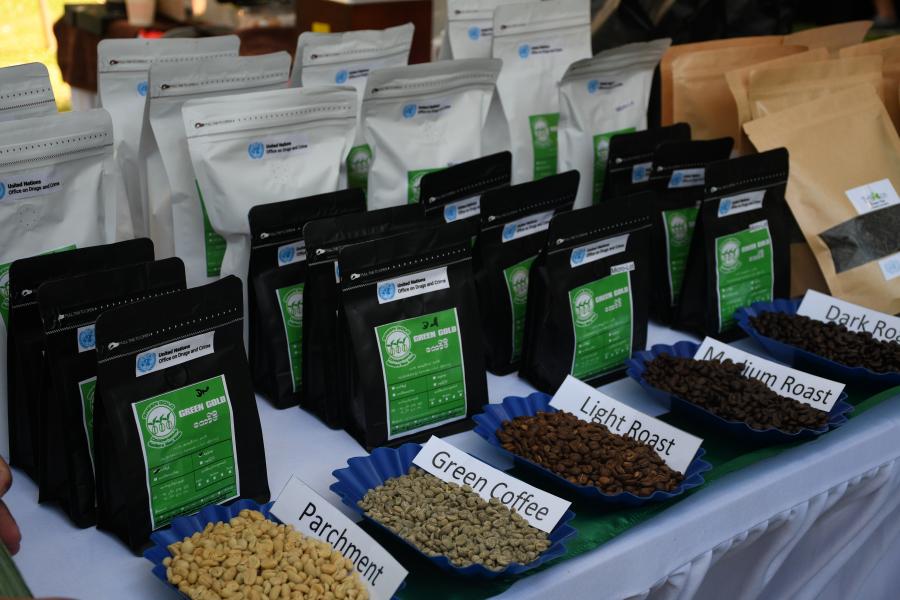
With the new plant, GGC can now process, roast and package its coffee independently, reducing reliance on third parties and unlocking new market opportunities. The cooperative also gains a modern space for training, innovation and quality control, strengthening its competitiveness in international markets.
“This achievement reflects the communities’ commitment to creating real alternatives to illicit economies,” said UNODC Country Manager Yatta Dakowah, who attended the inauguration. “It’s a clear example of how sustainable livelihoods can replace poppy cultivation when farmers are empowered and supported.”
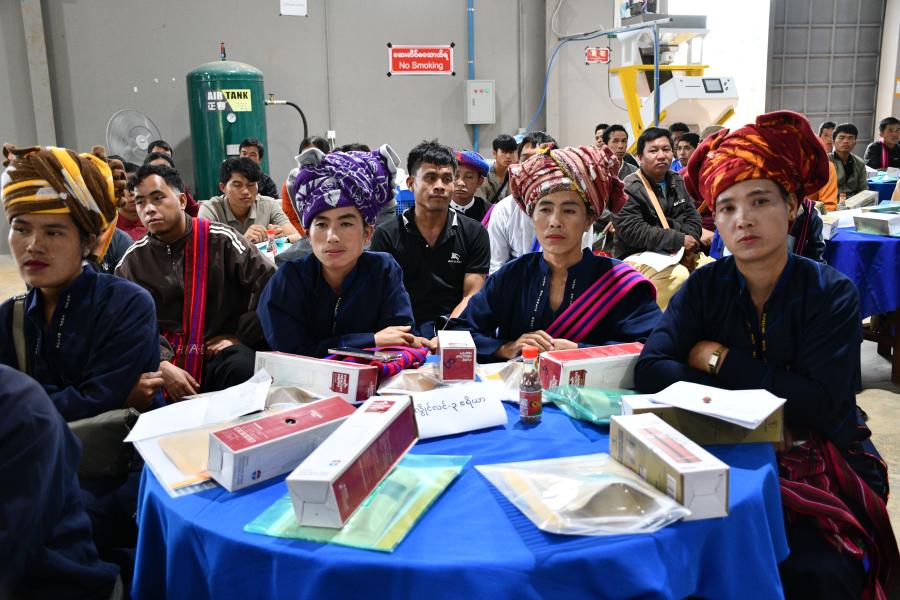
Between 2018 and 2024, GGC exported more than 1,000 tons of green coffee, generating USD 5.48 million in income and earning recognition as a symbol of quality, sustainability, and inclusion.
A celebration of partnership
On 25 September 2025, more than 250 participants gathered to celebrate the inauguration and GGC’s annual assembly. The event brought together farmers, government representatives, and international partners, including delegates from the Governments of Finland and Italy, JICA representatives, Malongo’s General Director Jean Pierre Blanc, and Shogo Yoshitake, Chargé d’Affaires of the Embassy of Japan in Yangon, who symbolically handed over the key to the new building.
“I would like to congratulate the members of the Green Gold Cooperative, and also the communities, partners, and organizations who helped make this important day possible,” said Yoshitake.
Elina Korhonen, Deputy Head of Mission and Head of Cooperation at the Embassy of Finland, praised GGC’s inclusive governance, noting:
“You have managed to establish inclusive governance with a gender-balanced board, which Finland —as a strong advocate for gender equality— is very happy to see. I would like to encourage you to continue enhancing inclusivity by increasing women’s participation.”
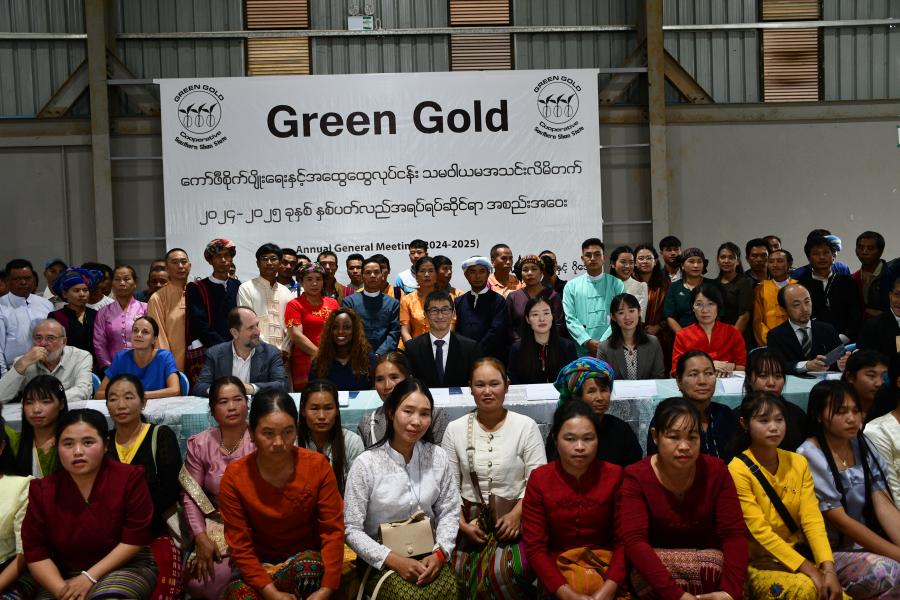
Representing Italy, Nicolò Tassoni, Head of Mission at the Embassy of Italy, added: “Coffee is part of Italian culture and a symbol of friendship. Italy is happy to support the Alternative Development project that brings —through your impressive work and achievement— a bright example of hope to farmers and people in South Shan.”
For GGC’s farmers, the new plant is more than a building; it is also a unifying symbol that serves as proof of what trust, cooperation, and shared vision can achieve. The facility offers a space for learning, dialogue, and community.
The success of the Green Gold Cooperative stands as a powerful example of Alternative Development in action showing how, with the right support, local communities can build sustainable futures, free from the vulnerabilities of illicit economies.
*This story was originally published on the UNODC website.


UN entities involved in this initiative
Goals we are supporting through this initiative