Safe drinking water reaches Yangon's most vulnerable children
UNICEF and partners bring safe drinking water to vulnerable communities in Myanmar's peri-urban townships
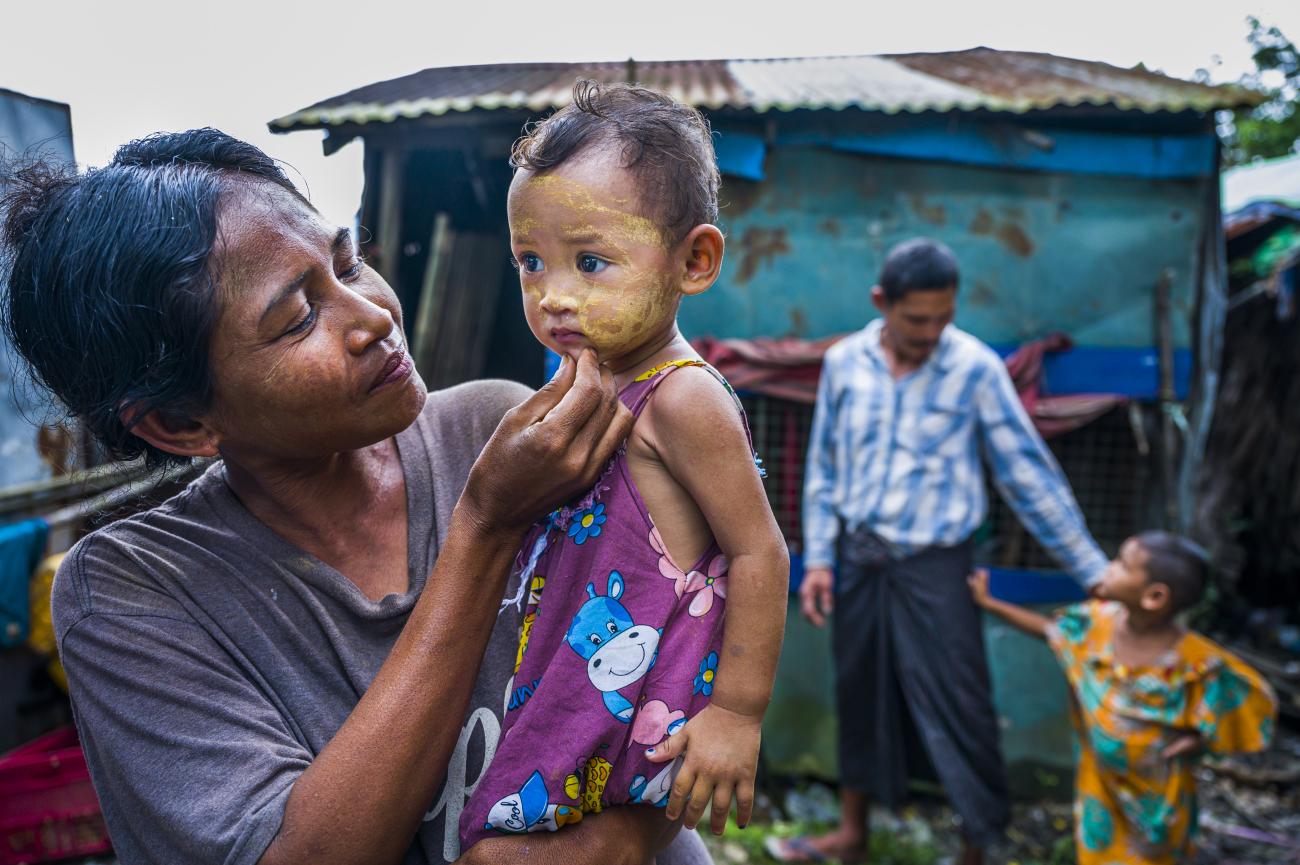
At only one year old, little Thun Yati was already fighting a battle no child should face.
In the cramped quarters of her family's home in Dala Township, Yangon, diarrhoea had become her constant companion, a cruel reminder of the contaminated pond water that was their family's only source of drinking water.
Every sip her mother Tin Tin Htwe gave her was filled with fear, knowing it could make her precious daughter sicker, but having no other choice.
Their story reflects a harsh reality affecting thousands of families across many peri-urban townships in Yangon Region, Myanmar, where insecurity and economic downturn have deepened existing vulnerabilities. As critical services, including health and education, face ongoing disruption, families already struggling with poverty find themselves increasingly cut off from basic necessities. Despite Yangon's urban growth, access to safe water remains critically limited for the most vulnerable communities, who now face compounding challenges that make survival itself a daily struggle.

Like many other families in Dala Township, Tin Tin Htwe, earning just 6,000 Myanmar Kyat (about $1.50) per day by washing clothes for neighbours, cannot afford bottled water or the fuel needed to boil pond water. Her husband's irregular fishing income of 150,000 MMK (approximately $35) monthly provides little security for basic necessities, leaving the family trapped in a cycle where unsafe water threatens their health daily.
To support the urgent need to address the water, sanitation, and hygiene challenges of the most vulnerable communities, UNICEF partnered with WaterAim to implement a comprehensive WASH programme across seven peri-urban townships in Yangon. Funded by the European Union's Civil Protection and Humanitarian Aid Operations (ECHO), the programme focuses on providing immediate relief, while building long-term community resilience.

"Access to safe water and good hygiene is vital for preventing the crises that contaminated water brings to vulnerable families," explains Pravin More, UNICEF Myanmar Chief of WASH. "Through our partnership with ECHO and local implementing partner WaterAim, we're not just providing water purification solutions, we're restoring hope and dignity to the families. When a mother no longer has to choose between unsafe water and her child's wellbeing, that is real progress.”
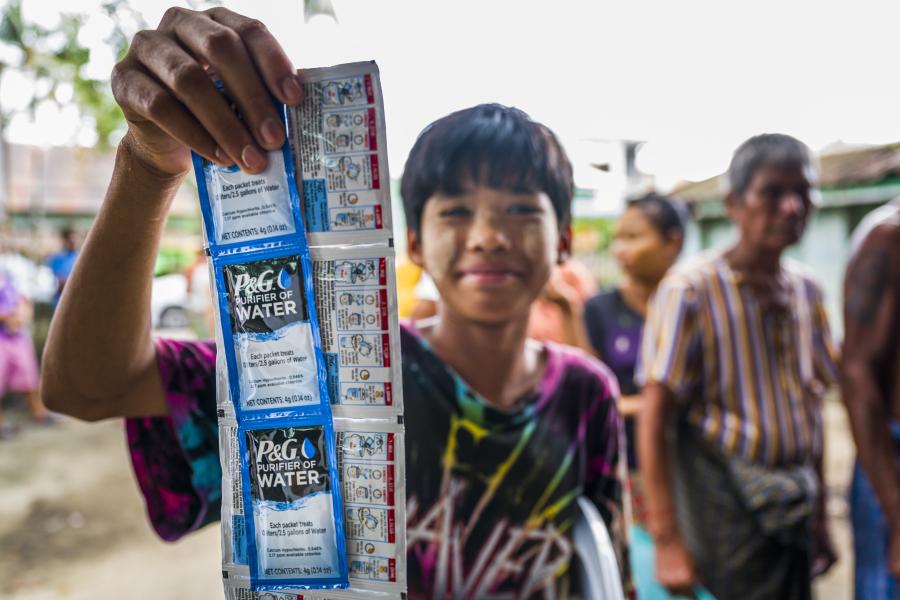
With ECHO’s support, families like Thun Yati's received water-purification tablets and sachets that transform pond water into safe drinking water within minutes. Community water purification systems installed in strategic locations serve multiple households, while community volunteers work directly with families to ensure they understand how to use these life-saving tools properly. When children do fall ill, crucial health supplies, including oral rehydration solution (ORS) packets and acute watery diarrhoea response kits, provide immediate treatment that families previously couldn't access or afford.
These combined interventions reached over 15,000 people across Yangon's peri-urban areas, including 4,800 children who now have a fighting chance against waterborne diseases that once seemed inevitable.
The change in Tin Tin Htwe's household was immediate and dramatic. For the first time, her family had access to clean, safe drinking water every day, and their health improved significantly. Most importantly, little Thun Yati's diarrhoeal episodes stopped entirely, and the ORS packets became a crucial lifeline during her recovery, something the family could never have afforded before.

"Now that we can drink clean water, I believe we can look forward to healthy, joyful days," said Tin Tin Htwe, watching her children play without the constant fear of waterborne illness. The programme brought more than just clean water, it restored hope and dignity to families who had been surviving day by day. “I want my son and daughter to grow up healthy, to study, and to have choices in life,” she said.
*This story was originally published on the UNICEF Myanmar website.


Written by

Saw Wai Moe
UN entities involved in this initiative
Goals we are supporting through this initiative